
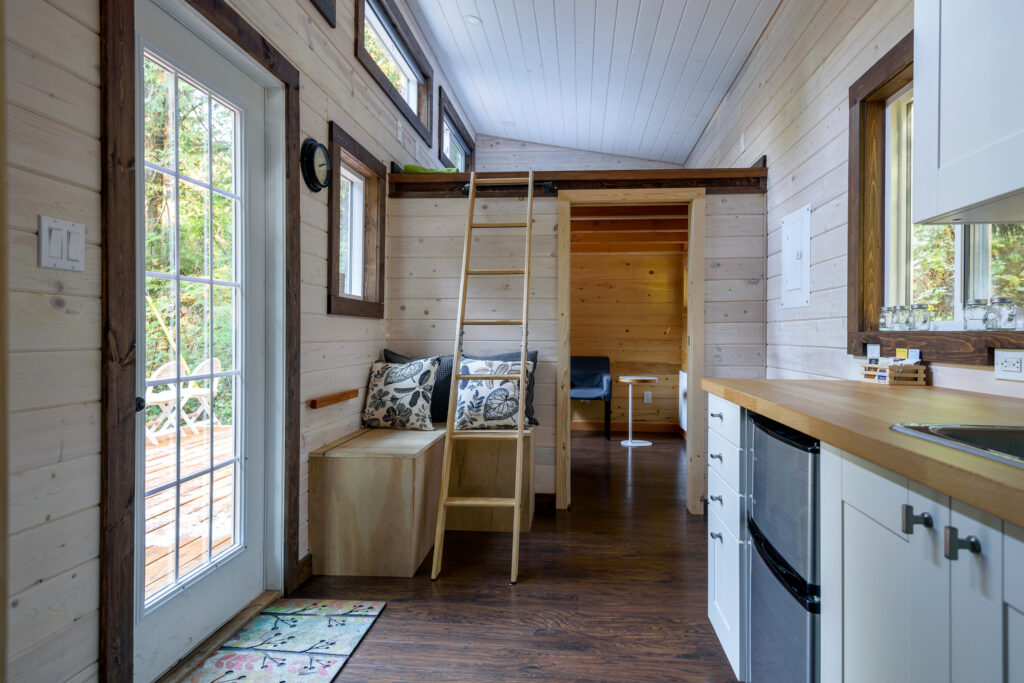
If you’ve looked at home prices lately, you may have wondered whether there’s a cheaper way to own a place of your own. That question often leads people to ask: how much money can a tiny house save me?
Tiny houses usually cost far less than traditional homes. They are smaller—often between 100 and 400 square feet—and designed to make the most of limited space. Because of their size, they can lower certain expenses like utilities and maintenance.
But the full picture is more complex. The amount you might save depends on the cost of the home, where you place it, how it’s financed, and what local rules apply. Some expenses shrink. Others don’t disappear at all.
Understanding both the savings and the added costs can help you see whether tiny house living fits your financial reality.
Tiny House Costs Upfront
When calculating how much money a tiny house might save, the first place to look is the purchase price.
What Does a Tiny House Cost?
Tiny house costs vary widely. The total price depends on:
- Whether it’s DIY or professionally built
- The quality of materials
- Custom features like built-in storage or high-end finishes
- Whether it’s built on wheels or a permanent foundation
A professionally built tiny house often costs far less than a traditional single-family home. However, the cost per square foot is often higher because small spaces require custom design, compact appliances, and built-in features.
Even so, the overall purchase price is usually much lower simply because the home is smaller.
Foundation or Trailer
Tiny houses are usually built in one of two ways:
- On wheels (like an RV or trailer)
- On a permanent foundation
This choice affects more than mobility.
A home on wheels may fall under recreational vehicle (RV) standards in some areas. A home on a foundation may be treated more like a traditional house under local building codes.
That difference can impact:
- Permits
- Property taxes
- Insurance requirements
- Financing options
The build type doesn’t automatically determine savings, but it can affect long-term costs.
High-Quality Materials in a Smaller Space
Because tiny houses are smaller, some owners choose higher-end materials without increasing the total price too much. For example, upgrading countertops or flooring in 300 square feet costs less overall than upgrading 2,000 square feet.
However, compact appliances and custom-built furniture are not always cheaper. In some cases, specialty items made for small spaces can cost more than standard-sized options.
Land and Parking: The Cost People Often Miss
A tiny house may cost less than a traditional home, but it usually does not come with land included.
That means the total cost depends heavily on where you plan to place it.
Buying Land
Purchasing land can be one of the largest added expenses. Prices vary widely by state, county, and whether utilities are already available. Rural land is often less expensive than land near cities, but it may not have water, sewer, or electric connections in place.
Adding utility hookups can increase upfront costs. Local governments may also charge permit and inspection fees before a home can be placed on the property.
Renting a Space
Some tiny house owners rent space instead of buying land. This might include:
- Leasing a private lot
- Renting space in a mobile home park
- Joining a tiny home community
Monthly rent can reduce the need for a large upfront investment, but it becomes an ongoing expense. Over time, lot rent can affect how much money a tiny house actually saves.
Zoning and Placement Rules
Where you can legally place a tiny house depends on local zoning laws and building codes.
Some municipalities have minimum square footage requirements for permanent homes. Others limit how long a tiny house on wheels can stay in one place. Certain areas require homes to meet specific building standards.
Fees for permits, inspections, and utility connections may apply depending on location.
Because land and zoning rules vary so much, they can significantly affect the total cost of tiny house living.
Tiny House Utilities and Monthly Bills
One reason people explore tiny homes is the potential for lower monthly expenses. Because the space is smaller, heating, cooling, and electricity use may be lower than in a traditional house.
Residential electricity costs are based on usage, measured in kilowatt-hours (kWh) (EIA electricity basics. A smaller space generally uses fewer kilowatt-hours, especially for heating and air conditioning.
Still, utility costs depend on more than square footage.
Heating and Cooling
A smaller home takes less energy to heat and cool. That can reduce monthly bills. However, insulation quality, climate, and energy source all affect costs.
For example:
- Colder climates may require more heating.
- Poor insulation can raise energy use.
- Electric heating may cost more in some regions than propane or natural gas.
Alternative Energy Options
Some tiny homes use solar panels. Solar systems can lower ongoing electricity bills, but they require upfront installation costs.
Other homes use propane for heating or cooking. Fuel prices change over time, so monthly costs may rise or fall depending on market conditions.
Water and Sewer
Tiny homes connected to city water and sewer systems typically pay monthly service fees.
Homes that use composting toilets or off-grid water systems may avoid sewer charges, but they still require equipment and maintenance.
Living off-grid can reduce some monthly bills. However, it may also require additional setup costs and regular upkeep.
Tiny House Insurance and Property Taxes
Insurance and property taxes are often based on a home’s value. Because tiny houses usually cost less than traditional homes, those expenses may also be lower.
Still, the amount you pay depends on how the home is classified and where it’s located.
Property Taxes
Property taxes are set by local governments and are typically based on the assessed value of real estate.
If a tiny house is built on a permanent foundation and considered real property, it may be taxed like a traditional home.
If it’s built on wheels and classified as a recreational vehicle (RV), it may be subject to different tax rules. In some areas, RVs are not taxed as real estate but may have registration fees instead.
Because classification rules vary, local tax offices determine how a tiny home is assessed.
Insurance Coverage
Insurance works the same way. The cost depends on:
- Whether the home is permanent or mobile
- Its replacement value
- Location and weather risks
- Whether it meets building standards
Homeowners insurance premiums are often influenced by location, construction type, and replacement costs.
Tiny homes on wheels may need RV insurance. Permanently installed homes may qualify for homeowners insurance if they meet building codes.
Insurance for tiny homes can sometimes be harder to find, especially if the structure does not meet local standards. That can affect both availability and cost.
Can You Get a Tiny House Mortgage?
Financing plays a major role in how much money a tiny house may save over time.
Traditional mortgages are designed for homes that meet standard building requirements and are permanently attached to land. Many tiny houses, especially those on wheels, do not meet those standards.
Why Financing Can Be Different
A tiny house on a foundation that meets local building codes may qualify for a traditional mortgage. However, lenders often have minimum loan amounts. Because tiny homes cost less, some buyers may not meet those thresholds.
Tiny homes on wheels are often classified as recreational vehicles (RVs). In those cases, buyers may need RV loans or personal loans instead of mortgages. Personal loans generally have shorter repayment terms and may carry higher interest rates than traditional mortgages.
Paying in Cash
Because tiny houses cost less overall, some buyers are able to pay in cash. That eliminates interest payments, which can significantly reduce total long-term costs.
However, not everyone chooses or is able to pay upfront.
How Financing Affects Savings
The purchase price is only part of the equation. The way a home is financed affects:
- Monthly payments
- Total interest paid
- Length of repayment
A smaller loan does not always mean lower monthly costs if interest rates are higher or the repayment term is shorter.
Financing options can influence how much money a tiny house ultimately saves compared to a traditional home.
Downsizing and Everyday Living Costs
Tiny house living often requires major lifestyle changes. Some of those changes can lower spending. Others may add small but steady costs.
Storage and Possessions
A tiny home has limited storage space. That may reduce spending on furniture, décor, and household items simply because there is no room to store extras.
However, some people rent storage units to hold items that do not fit. Monthly storage fees can become an added expense, depending on how much needs to be stored and for how long.
Selling belongings before moving into a tiny house can offset some upfront costs. But the long-term impact depends on personal habits and lifestyle choices.
Laundry
Many tiny houses do not have space for a full-size washer and dryer. That can mean regular trips to a laundromat. While individual loads may not cost much, the expense adds up over time.
Food Storage and Shopping
Smaller kitchens usually include smaller refrigerators and limited pantry space. That may reduce bulk buying.
For some households, buying smaller quantities at regular grocery stores can change overall food spending patterns. Whether costs rise or fall depends on shopping habits, pricing in your area, and how often you shop.
Entertaining and Space Limits
A tiny home offers limited indoor space for guests. That may shift social gatherings outdoors or to other locations.
In colder climates, limited indoor space can affect how often guests visit. In warmer areas, outdoor living space may expand usable square footage.
Lifestyle adjustments do not always show up as line items in a budget, but they can influence long-term spending.
Tiny House Resale Value
Resale value plays a role in long-term savings. Traditional homes often build equity over time, depending on market conditions. Tiny houses can behave differently.
Several factors influence resale value:
- Build quality
- Age and condition
- Whether the home meets building codes
- Mobility (on wheels vs. foundation)
- Local demand
A tiny house built on a permanent foundation and placed legally on land may be easier to finance and sell than one that does not meet local requirements.
Tiny homes on wheels may be treated more like recreational vehicles. RVs typically depreciate over time, meaning their value can decline as they age.
Market demand also matters. In some areas, interest in small-space living remains strong. In others, zoning restrictions or limited financing options may reduce the pool of buyers.
Because resale depends on local rules and buyer interest, it is difficult to predict how much value a tiny house will hold over time.
Final Thoughts
So, how much money can a tiny house save you?
For many people, the biggest savings come from the lower purchase price and potentially lower utility bills. Smaller space often means lower maintenance costs as well.
At the same time, expenses like land, permits, insurance, financing, and zoning requirements can affect the final numbers. Resale value and classification also influence long-term financial impact.
A tiny house can reduce certain housing costs. Whether it leads to significant savings depends on where it is placed, how it is financed, and how it fits into your daily life.