Business checks are common for payments from employers, clients, or companies, but cashing them can be confusing for your first time. Read on to learn how.
What Is a Business Check?
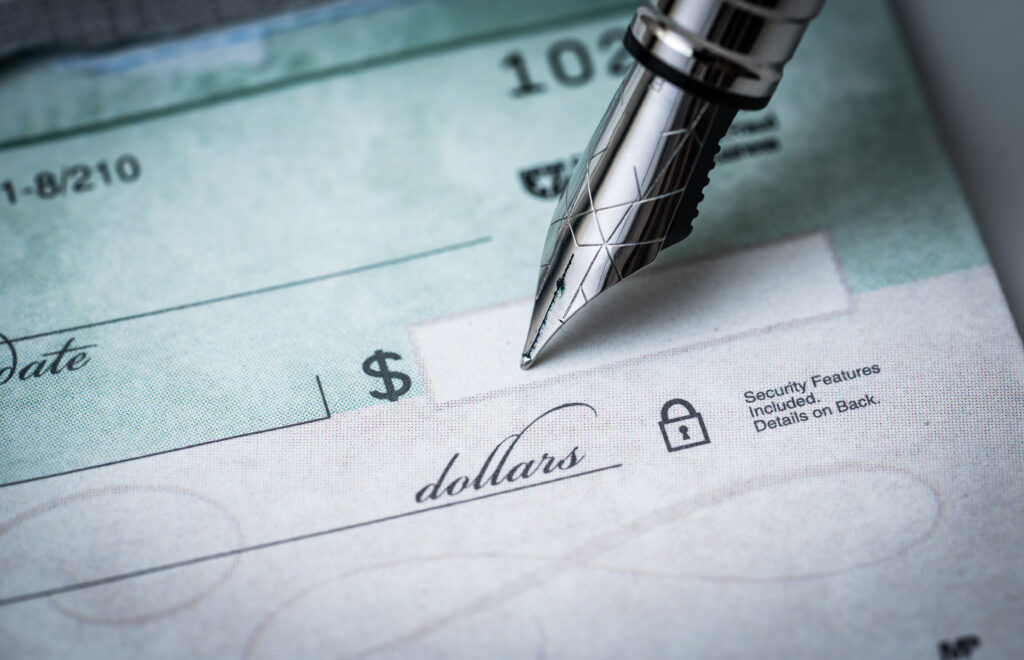
A business check is a paper check written from a company’s bank account instead of a personal account. It usually includes the business name printed on the check and may look more formal than a personal check.
Banks may treat business checks differently because they are more susceptible to fraud. According to the Federal Deposit Insurance Corp. (FDIC), banks may place holds on certain checks, including business checks, to ensure the funds clear before releasing cash.
Review the Check Carefully
Before attempting to cash the check, examine it closely. Make sure:
- Your name is spelled correctly
- The dollar amount matches what you expect
- The check is signed
- The date is current
Most checks are valid for about six months. An older check will be rejected, even if the funds are available.
Choose Where to Cash the Business Check
You have several options when deciding where to cash a business check:
Your Bank or Credit Union
Cashing the check at your own bank is often the easiest option. If you have an account, the bank may cash it or deposit it with little or no fee. Some banks provide immediate access to part or all of the funds, depending on your account history.
Pros
- Little to no fee for account holders
- Lower risk of fraud issues
- Easier access to customer support if there is a problem
Cons
- Funds may be placed on hold
- Not helpful if you don’t have an account
The Business’s Bank
You may also be able to cash the check at the bank listed on it. This can work even if you do not have an account there, but many banks charge a fee for non-customers.
Pros
- Funds are more likely to be available since the check is drawn on that bank
- No need to open an account
Cons
- Fees are common for non-customers
- Some banks limit the amount of cash they will provide.
Check-Cashing Stores
Check-cashing services are another option if you do not have a bank account. According to the Consumer Financial Protection Bureau (CFPB), these services often charge higher fees, typically as a percentage of the check amount. Always ask about the fee before cashing the check.

Check-cashing fees vary widely, typically ranging from 1% to 10%. However, stores like Walmart charge a maximum fee of $4 for checks up to $1,000, or $8 for checks above $1,000.
Pros
- Quick access to cash
- No bank account required
- Extended hours, including evenings and weekends
Cons
- Higher fees, often a percentage of the check amount
- Fewer consumer protections than banks
Bring the Required Identification
Most places require a valid, government-issued photo ID to cash a business check:
- Driver’s license
- State ID card
- Passport
Some banks may also ask for your debit card or account number if you are cashing the check where you bank.
Endorse the Check Correctly
Endorsing a check means signing the back of it. If you are depositing the check instead of cashing it, your bank may request that you write “For deposit only” under your signature for added security.
Understand Possible Holds and Fees
Even if you follow every step, the bank may not release all the money right away. Holds are common with business checks, especially if:
- The check amount is large
- You are a new customer
- The business is unfamiliar to the bank
The CFPB explains that federal rules limit how long banks can hold funds in many cases, but business checks may still take several business days to fully clear.
Common Problems When Cashing a Business Check
Some issues may prevent you from cashing a business check right away:
- The business’s account has insufficient funds
- The check looks altered or damaged
- The amount is above the location’s cash limit
If this happens, you may need to deposit the check instead or ask the business to reissue payment, though this is uncommon.
Tips for a Smoother Experience
- Cash the check during normal banking hours
- Bring more than one form of ID if possible
- Ask about fees and holds before completing the transaction
- Keep your receipt for records
Avoid Scams
Business check scams are common and can lead to lost money if you are not careful. Scammers may send fake checks and ask you to cash them, then request part of the funds back before the checks clear. When the check later bounces, you are responsible for the full amount.
According to the Federal Trade Commission, one of the biggest warning signs is being asked to return money, pay fees, or send gift cards after cashing a check. Legitimate businesses do not ask for refunds or payments before a check has fully cleared.
If you feel rushed or unclear about how to proceed, ask your bank for guidance.