

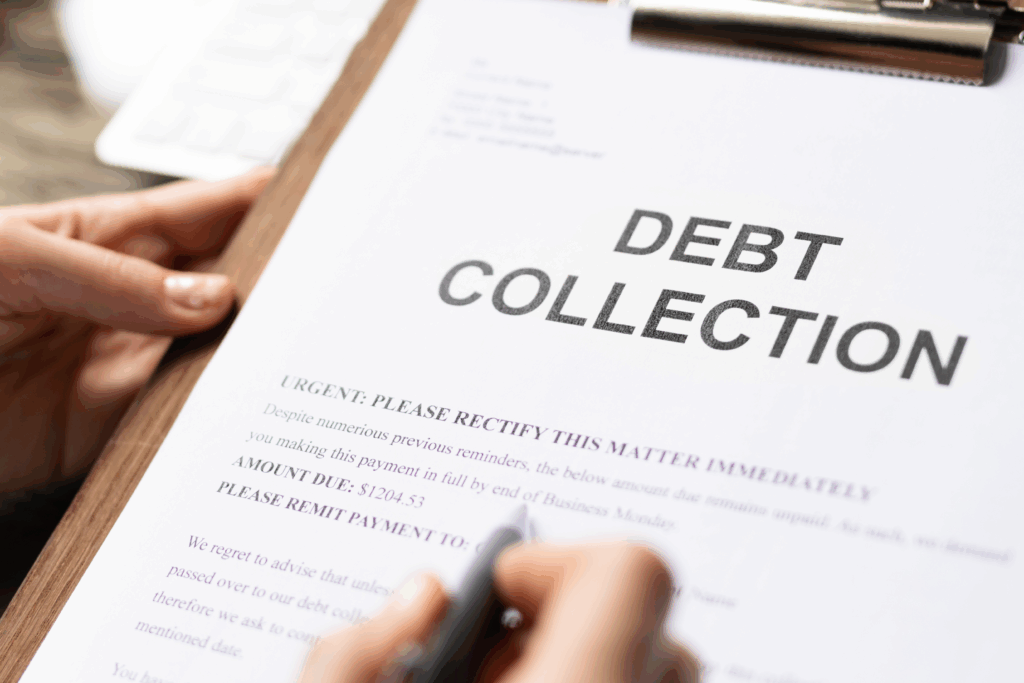
Dealing with debt collectors can feel intimidating, especially if the calls or letters seem constant. But you don’t have to face that stress without support.
Federal law gives you rights that protect you from debt collector harassment and unfair collection practices.
The Fair Debt Collection Practices Act (FDCPA) outlines how debt collectors can and cannot contact you. These rules exist to help consumers communicate safely and fairly with collection agencies.
Knowing what’s allowed — and what isn’t — can help you take control of the situation and protect your peace of mind.
How To Deal With Debt Collectors
If a debt collector reaches out to you, take a moment to stay calm before responding. You don’t need to agree to make a payment right away. Instead, start by exercising your right to request written verification of the debt.
Within five days of first contacting you, a debt collector must send you a notice that includes:
- A statement that the message is from a debt collector
- Your name and address, along with the collector’s contact details
- The name of the original creditor
- The account number (if one exists)
- An itemized breakdown of the debt, including interest, fees, payments and credits
- Instructions on how to dispute the debt within 30 days
- Details on how to contact the collector
Collectors can send this notice by mail or electronically. If you don’t receive it within five business days of the first time a collector contacts you — or if the information looks incomplete — you can file a complaint with the Consumer Financial Protection Bureau (CFPB).
Disputing a Debt With Collectors
Once you receive the written validation notice from a debt collector, you have 30 days to dispute the debt in writing. This is called your debt validation period. During that time, the collector must pause collection efforts until it verifies the debt and provides supporting documentation.
You can dispute a debt for several reasons, such as when:
- You don’t recognize the debt
- You already paid the debt
- The amount seems incorrect
- You believe the debt belongs to someone else
The Consumer Financial Protection Bureau (CFPB) offers free sample letters you can use to request more information, dispute a debt or limit how collectors contact you. When you send your letter:
- Use certified mail and ask for a return receipt so you have proof of delivery
- Keep a copy of your letter and all responses you receive
- Clearly state that you’re disputing the debt and why
If you believe the debt isn’t yours, ask for the name and contact details of the original creditor. The collector must stop contacting you until it verifies the debt. Verification usually includes copies of statements or other documents that link you to the account.
It’s also important to make sure the debt collector is legitimate. Ask for the company name, address and phone number, and confirm it is registered with your state’s consumer protection or banking regulator.
If the company refuses to share that information or can’t verify the debt, it could be a scam.
Under the Fair Credit Reporting Act (FCRA), if you dispute a debt, the collector must tell credit-reporting companies that the debt is under dispute. In turn, those credit bureaus must mark your account as “disputed” and forward your documentation to the company that reported the debt.
Harassment and Abuse
You have the right to demand that debt collectors treat you with respect. The Fair Debt Collection Practices Act (FDCPA) clearly outlines what collectors can — and cannot — do when contacting you about a debt. If a collector crosses the line, you can take action to protect yourself.
1. Contact Limits
Debt collectors can only contact you in ways the remain within the following limits:
- They can’t call before 8 a.m. or after 9 p.m. (based on your time zone) unless you give them permission to do so
- They can’t call you more than seven times in seven days about the same debt
- They can’t call again within seven days after speaking with you about that debt
- If you tell them not to call you at work — and your workplace doesn’t allow personal calls — they must stop
You can also ask them to stop contacting you altogether, or to only reach out through your lawyer. It’s your right to choose how communication happens.
2. Communication Rules
Collectors must give you easy ways to limit or stop contact by text, email or social media. They cannot:
- Post about your debt publicly
- Swear, threaten or use obscene language
- Mark envelopes or letters in a way that shows they’re from a debt collector
3. Behavioral Standards
Debt collectors are also prohibited from:
- Contacting friends, family or your employer to discuss your debt. A collector can only call such people once to ask for your contact details.
- Refusing to give their name or the company they represent
- Continuing to contact you after you’ve filed for bankruptcy
If a collector violates any of these rules, you can report it to the Consumer Financial Protection Bureau (CFPB) or your state attorney general’s office. In some cases, you may have the right to take legal action for damages.
Your Options if You Get Sued
Getting sued over a debt can feel overwhelming, but ignoring the lawsuit will only make things harder. When you receive a court notice, you have the right to respond — and you should.
If you don’t respond by the deadline listed in your court documents, the judge may issue a default judgment. That means the collector automatically wins the case, even if the debt is inaccurate or is not yours. A default judgment can allow a creditor to garnish wages, place a lien on property or freeze a bank account.
Responding to the lawsuit doesn’t mean you agree that you owe the debt. Instead, it simply protects your right to tell your side of the story. In court, the debt collector must prove that the debt is valid and that the collector has the legal right to collect the debt.
You don’t have to face this alone. You may be able to find help through a local legal aid organization or a consumer law attorney. Many offer free or low-cost services to people who qualify. Your state or county bar association can often refer you to a legitimate resource.
Even if a lawsuit feels intimidating, taking action helps you stay in control. Understanding your rights and getting informed guidance can make a difficult situation more manageable.
Final Thoughts
Debt collection can be stressful, but it doesn’t have to leave you feeling powerless.
Understanding your rights under the FDCPA and FCRA gives you the tools to handle collectors with confidence and protect your peace of mind.
If you’re unsure about how to respond or need extra help, consider contacting the CFPB or a local legal aid organization. Support is available, and knowing your rights is the first step toward regaining control of your financial situation.