

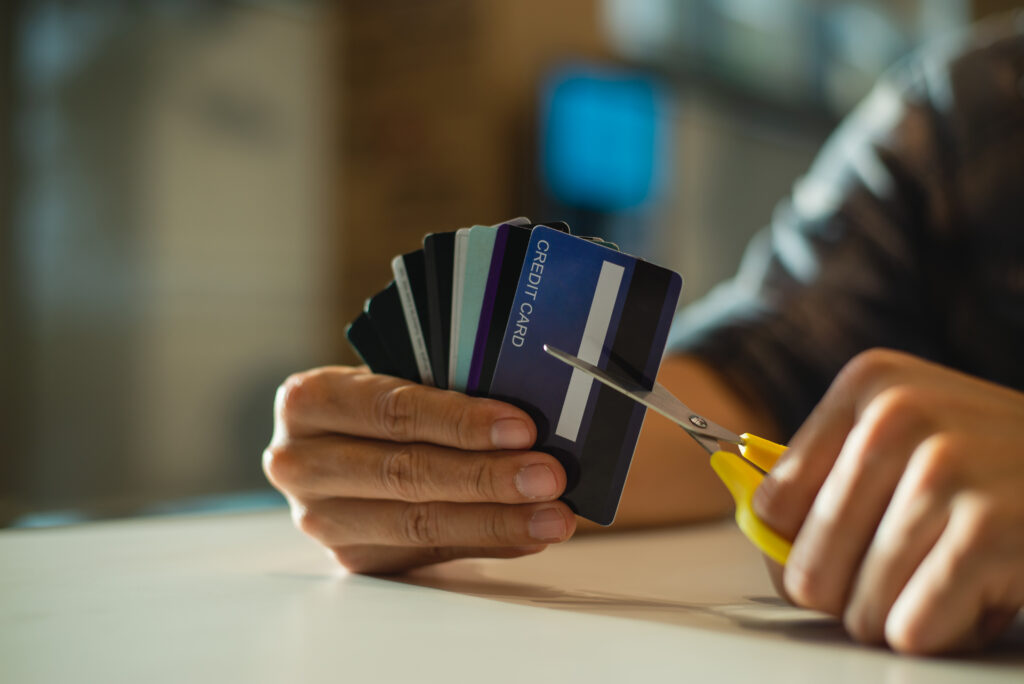
You may have gotten a credit card to cover financial emergencies, stretch your money between paychecks or earn rewards points. But what starts as a useful financial tool can contribute to an out-of-control spending pattern.
People sometimes use the phrase “credit card addiction” to describe compulsive or hard-to-control credit card use. While such an “addiction” isn’t a recognized clinical diagnosis, the underlying behaviors still create real financial and emotional stress.
Learn about some common warning signs of problematic credit card use. Recognizing the pattern can be an important first step toward changing it.
Then, discover some practical ways to reduce your reliance on credit cards.
10 Signs of Problematic Credit Card Use
If you’ve ever wondered whether credit card use has become a problem, you’re not alone. The warning signs may not be obvious, and they don’t always involve maxed-out credit cards or overwhelming balances.
Here are some patterns that make it harder to manage your finances.
You Only Make Minimum Payments
The minimum payment is the smallest amount your card issuer requires you to pay each month.
Paying at least the minimum can help you avoid being marked late on the account, but paying only the minimum can make repayment take longer and increase the interest you pay. If minimum payments are all you can afford, it may signal that balances are straining your budget.
Your Cards Are Near the Limit or Maxed Out
High balances aren’t always a sign of compulsive spending. A major car repair, medical bill or unexpected hardship can temporarily raise balances.
But if your cards regularly stay near their limits and you don’t have room to pay the balances down, it may signal that your spending or necessary expenses are outpacing the money available to cover them.
High balances can also matter for your credit because credit-scoring models consider how close you are to available credit limits, according to the Consumer Financial Protection Bureau.
You Use Credit Cards for Everyday Basics
Do you regularly put necessities on a credit card because you don’t have enough cash to cover them?
Such necessities might include:
- Groceries
- Gas
- Utility bills
- Rent
- Household essentials
Using a credit card for routine purchases isn’t necessarily a problem. But consider it a warning sign if you rely on credit because your income doesn’t consistently cover your basic expenses.
This is especially true if the resulting balances keep growing.
You Open New Cards to Keep Spending
Another potential warning sign is opening new cards because you’ve run out of available credit on existing accounts.
In some cases, you might open a new account for a specific purpose, such as taking advantage of a balance-transfer offer, signup bonus, rewards program or larger credit limit.
But if new credit becomes a way to continue spending without addressing existing balances, it may provide temporary breathing room without solving the underlying financial problem.
You Take Cash Advances or Keep Shifting Debt Around
With a cash advance, you borrow cash through your credit card, often up to a separate, lower cash-advance limit.
Cash advances commonly come with a fee and a higher interest rate than what you pay on purchases. In addition, interest charges usually start right away. So, check your card agreement before using a cash advance.
If you regularly take cash advances to pay bills or make it through the month, that may indicate your finances are stretched too thin.
The same is true if you’re continually moving debt from card to card without making progress on the underlying balances. A balance transfer can be useful, but it works best as part of a repayment plan rather than simply creating more room to borrow.
You Buy on Impulse and Regret It Later
Impulse purchases happen. The pattern becomes more concerning when the spending is frequent, feels hard to control, interferes with your budget or repeatedly leads to regret.
For some people, the cycle may involve feeling excited or relieved while spending, and then feeling stressed, guilty or worried when the bill arrives.
If that cycle keeps repeating despite attempts to stop it, look beyond the balance itself and consider what is driving the behavior.
You Hide Purchases or Statements
Keeping secrets from your partner can be another warning sign.
You might:
- Delete purchase notifications
- Hide statements
- Keep accounts or purchases secret
- Avoid conversations about money
When someone intentionally hides financial activity from a partner, it’s sometimes described as financial infidelity.
More broadly, feeling the need to conceal your spending may be a sign that you’re uncomfortable with the pattern or worried about its consequences.
You Avoid Looking at Your Statements
Have you found yourself avoiding a statement because seeing the balance feels stressful?
Avoidance can make it harder to spot important changes or take action early. Regularly reviewing your account can help you keep track of:
- Growing balances
- Late fees
- Interest charges
- Changes to your APR
- Missed or upcoming payments
Credit card statements also show your required minimum payment and due date, so ignoring them can make an already difficult financial situation harder to manage.
You Have Little or No Emergency Fund
If you don’t have savings available, an unexpected car repair, medical bill or other expense may have to go on a credit card.
That doesn’t necessarily mean you have a spending problem. Financial hardship can make saving difficult, especially when money is already tight.
But if every unexpected expense requires new borrowing and you’re unable to rebuild even a small financial cushion between emergencies, that reliance on credit is a useful pattern to recognize.
Thinking About Your Cards Makes You Feel Panicked or Stuck
Credit card debt can carry an emotional burden as well as a financial one.
Does thinking about balances make you feel overwhelmed, ashamed, anxious or simply unable to face your finances? Don’t ignore those feelings.
Avoiding the situation because it feels stressful can make it harder to review statements, ask for help or make a repayment plan.
If spending feels compulsive or the emotional distress around money is interfering with your daily life, consider talking with a qualified mental health professional.
How to Stop Overusing Credit Cards and Break the Cycle
If you’re trying to reduce how often you rely on credit cards, you don’t have to change everything at once. Small changes that make spending more intentional may be easier to maintain.
Create Friction Before You Spend
Credit cards make it easy to complete a purchase quickly, especially when your information is already saved online or in a digital wallet.
Making credit slightly less convenient can give you more time to decide whether you really want to buy. That might mean:
- Removing saved card information from online retailers
- Logging out of shopping apps after each use
- Leaving cards at home for planned errands when another payment method will work
- Waiting 24 hours before making nonessential purchases
- Carrying only the payment method you intend to use, such as with the cash envelope system
The goal isn’t to stop using credit cards forever, but to make spending more deliberate when convenience has become part of the problem.
Build a Basic Spending Plan and Emergency Buffer
A simple spending plan can help you understand where your money needs to go each month.
Start by listing:
- Monthly income
- Housing costs
- Utilities
- Insurance
- Transportation
- Food
- Minimum debt payments
- Other essential expenses
Once you can see the full picture, look for any amount you can realistically set aside for unexpected costs. Even a modest emergency buffer may reduce the need to reach for a credit card every time an unplanned expense comes up.
If your income isn’t enough to cover essentials and minimum payments, budgeting alone may not solve the problem. The Consumer Financial Protection Bureau recommends contacting your credit card company promptly if you’re having trouble making payments, because the issuer may offer payment-assistance options.
Get Support if the Pattern Feels Hard to Change Alone
If your credit card debt has become difficult to manage, you don’t have to address every part of the problem by yourself.
Nonprofit credit counseling may be one option. Credit counselors can review your finances, help you develop a budget, discuss debt repayment strategies and possibly help establish a debt management plan.
The Consumer Financial Protection Bureau provides additional guidance on how credit counseling works.
The spending behavior itself may also deserve attention. Consider speaking with a mental health professional if you:
- Repeatedly feel unable to control purchases
- Use spending to cope with difficult emotions
- Hide your behavior
- Experience significant distress because of your spending
Financial counseling can address the debt, while mental health support can help you explore behaviors or emotions that may contribute to the spending pattern.
One Step Can Change the Pattern
Problematic credit card use can develop gradually through habits that become harder to manage over time. Recognizing those patterns can help you decide what needs to change.
You don’t need to overhaul your entire financial life overnight. Instead, start by:
- Reviewing your statements
- Creating a basic spending plan
- Building a small emergency buffer
- Making spending less convenient
- Asking for help if the pattern feels difficult to change on your own
With greater awareness and the right support, you may be able to reduce your reliance on credit cards and build a more manageable relationship with spending and debt.