
When you’re considering a debt relief program, it helps to hear from someone who’s been through it. Dalton’s story is one that many people will recognize.
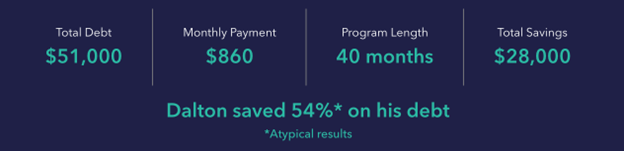
He was carrying about $51,000 in debt. To keep up with bills, he worked three jobs — and even with that schedule, he was constantly falling behind.
The strain went far beyond his bank account. “Being in debt hindered me as a person, professionally and socially,” he explained. “To make ends meet, I was working a full-time job and two part-time jobs. I couldn’t go out on the weekends with my friends. I couldn’t participate in any of my hobbies.”
When most of your income goes toward minimum payments, progress can feel slow or impossible. Dalton’s situation is one that many National Debt Relief clients describe in their reviews: juggling bills, extra work, and daily expenses — and still not getting ahead.
Eventually, he decided to explore a debt settlement program. But before enrolling, he wanted to understand how the process had worked for others.
Why Dalton Started With National Debt Relief Customer Reviews
Before choosing a debt relief company, Dalton spent time reading National Debt Relief customer reviews. He wanted to understand what the experience felt like for real people.
Many of the reviews of National Debt Relief described strong customer support and help communicating with creditors. That idea stood out to him. Managing negotiations alone felt intimidating.
“Part of the reason I went with National Debt Relief was that I saw countless five-star reviews,” Dalton said. “It was people experiencing great things with their customer service, getting their debts negotiated down, having the support team so they didn’t have to go it alone.”
Stories like these appear frequently in National Debt Relief testimonials, where former clients describe how the program worked in practice. For Dalton, seeing those experiences helped him feel more comfortable learning about the program.
Still, reviews only tell part of the story. Understanding the process itself matters just as much.
How Does National Debt Relief Work?
Many people reading National Debt Relief program reviews want a simple explanation of how National Debt Relief works.
National Debt Relief offers a service called debt settlement, which involves negotiating with creditors to resolve unsecured debts—such as credit cards or personal loans—for less than the full balance owed.
The process generally follows several steps.
1. Financial Review
You typically begins with a consultation. During this step, a specialist reviews income, debt balances, and monthly expenses such as rent, groceries, transportation, and insurance.
This helps determine whether a debt settlement program may fit the situation.
2. Monthly Deposits
If someone enrolls, they begin making monthly deposits into a dedicated savings account set up in their name. This account is used later to fund settlements with creditors.
3. Negotiation With Creditors
As funds build, negotiators contact creditors to try to reach settlement agreements. A settlement means the creditor agrees to accept a reduced payment instead of the full balance.
Any settlement offer must be reviewed and approved by the client before payment is made.
4. Resolving Debts
Once a settlement is approved, funds from the account are used to pay the negotiated amount. The process repeats until each enrolled debt is resolved.
Many programs are designed to be completed in about 24 to 48 months, although timelines vary depending on factors like total debt and monthly deposits.
Dalton’s Milestones From Enrollment to His First Settlement
After enrolling, Dalton worked with a debt coach to review his finances. They looked closely at his monthly expenses, including rent, food, gas, and insurance. This helped them determine a monthly payment that fit within his budget.
Dalton said the support team helped him adjust the plan when needed. If something changed financially, he could contact them to discuss options.
The turning point came when he saw his first settlement offer. After months of deposits into his account, one creditor agreed to settle for less than the full balance. That moment changed how Dalton viewed the process.
“After seeing that first settlement plan come in and making my first payments directly to a creditor, I finally felt I had a way out,” he said.
Over time, additional negotiations followed. Dalton reported that his debts were reduced by about $28,000 during the program.

It’s important to remember that forgiven debts above $600 count as taxable income. Be sure to budget for that before filing your tax return.
Dalton, for instance, might owe about $6,000 in taxes on the forgiven $28,000 if his taxable income puts him in the 22% tax bracket (the most common tax bracket).
What Dalton’s Story Shows Beyond the Numbers
By the time Dalton completed the program, the biggest change was not just financial.
Earlier, debt had forced him to work multiple jobs and give up time with friends and hobbies. As settlements were completed and his finances improved, he transitioned into a better-paying role in IT and regained stability in his schedule.
Dalton said the experience helped him feel in control again. He could enjoy hobbies, purchase a motorcycle, and move into his own place.
Moving Forward After Debt
Dalton’s experience shows how debt can affect daily life, work, and personal goals. When balances grow faster than payments, it can feel like progress is out of reach.
Every financial situation is different. Taking time to review available solutions and understand how they work can help you decide what path makes the most sense for your circumstances.