

Nearly Half Sports Spenders Have Gone Into Debt
Sports fandom has always come with a price tag. But today, the cost of jerseys, streaming subscriptions, game-day tickets and fantasy league buy-ins is climbing, making it more expensive to participate in pastimes that are central to many Americans’ social lives. A new survey commissioned by National Debt Relief and conducted by Censuswide among 2,000 U.S. adults shows that for a growing number of fans, rooting for a team isn’t just a hobby, it’s becoming a financial liability.
Key Findings:
- 62% of Americans spent/will spend money on sports in 2026, and 52% say fandom is an important part of their identity*.
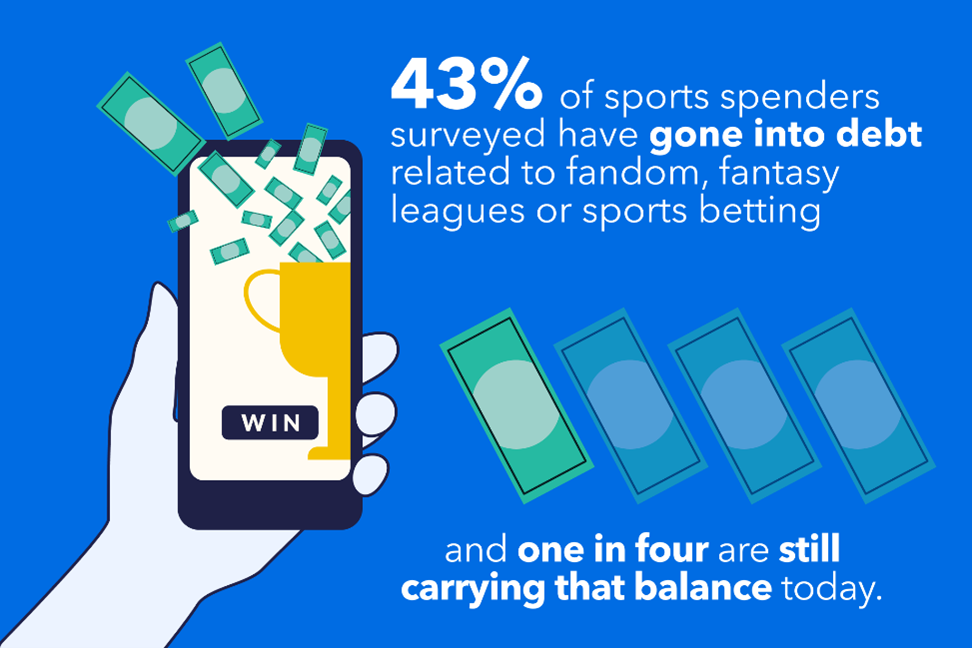
- 43% of sports spenders surveyed have gone into debt related to fandom, fantasy leagues or sports betting*, and one in four (25%) are still carrying that balance today.
- Over one-third (34%) of respondents report financial stress from sports spending.*
- One in five (20%) Americans say they would be willing to go into debt for sports fandom outright, including 27% of men and 13% of women.
Younger Fans Are Feeling It the Most
The financial pressure tied to fandom isn’t spread evenly across generations. Younger sports fans are shouldering the heaviest burden by far:
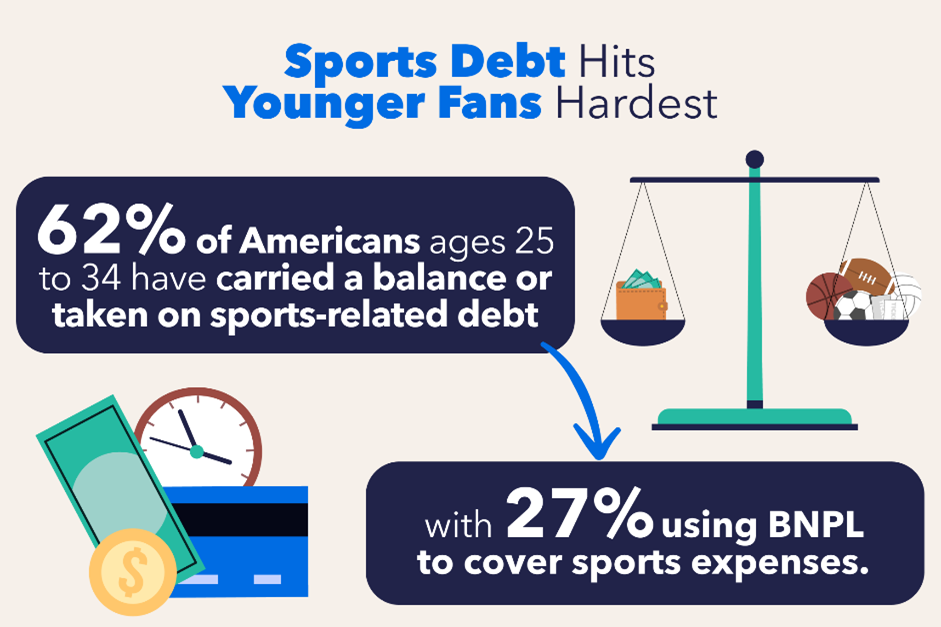
- 62% of Americans who have spent on sports surveyed, ages 25 to 34, have carried a balance or taken on sports-related debt, the highest share of any age group surveyed.*
- 27% of spenders aged 25 to 34 are using Buy Now, Pay Later (BNPL) to cover sports expenses, a payment method that can make it easy to lose track of how much is actually being spent until the bill comes due.
- Ages 18 to 44 report experiencing more financial stress related to sport fandom than those 45 and older.*
Football Season Is Where the Spending Really Adds Up
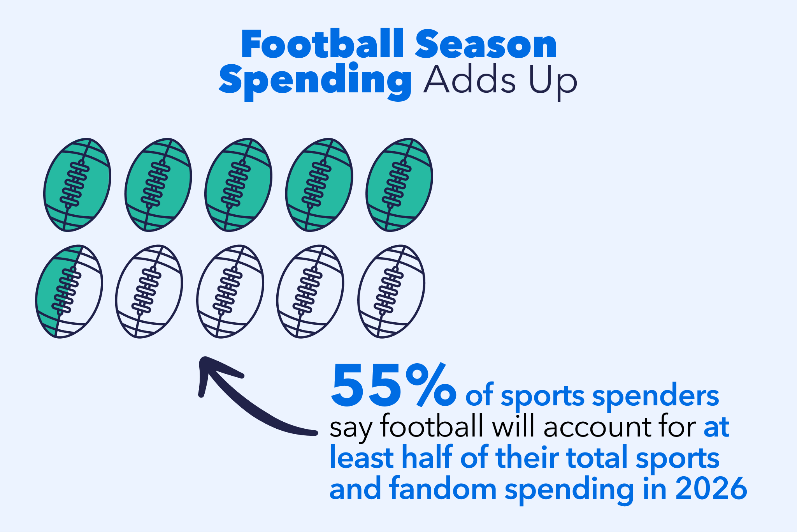
With NFL and college football back in full swing, timing matters. The survey found that 55% of sports spenders surveyed say football will account for at least half of their total sports and fandom spending in 2026.* Tickets, streaming bundles, tailgating, merchandise and betting activity around game day all tend to hit at once, and for many fans, that means reaching for a credit card or a BNPL plan to cover the gap.
Football’s Growing Pull with Women Fans
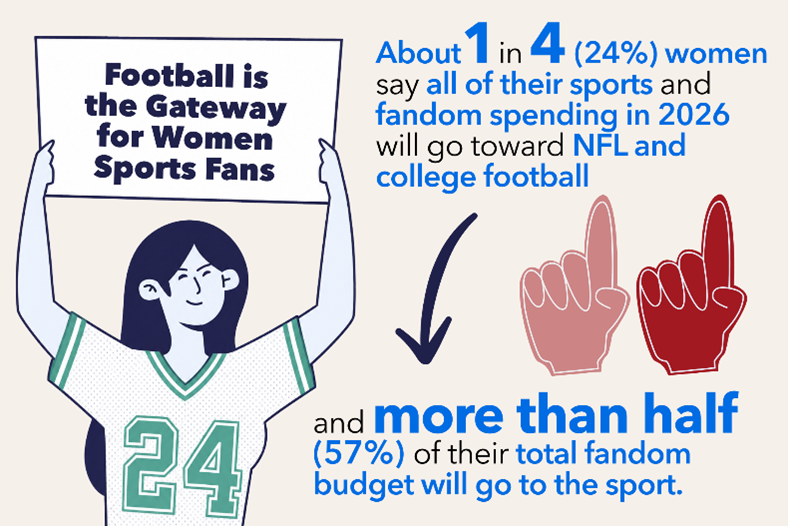
While sports fandom is generally more prevalent among men than women (65% of men say being a sports fan is part of their identity, compared to 40% of women, and average spending on sports fandom in 2026 among men is $2,224 compared to women’s $1,573), women who have/will spend on sports in 2026 surveyed seem more likely to concentrate their spending on football versus other sports. Among women who spend on sports surveyed, National Debt Relief found 24% of women say all of their sports and fandom spending in 2026 will go toward NFL and college football, compared to 16% of men. Additionally, women who spend on sports surveyed report an average of 57% of their total fandom budget going to NFL/college football, slightly higher than men’s average of 54%.
That trend tracks with a broader shift already underway nationally. According to a Morning Consult report, 64% of Gen Z and millennial women held a favorable view of the NFL as of December 2023, the highest level on record for that group. As more women concentrate their fandom spending on football, many are relying on the same credit cards and BNPL plans flagged elsewhere in the survey, tools that can turn a single passionate season into a balance that lingers.
Higher Earners Spend More, But No Income Bracket Is Immune
Income plays a role too. As the chart below shows, spending across nearly every fandom category, from streaming to tickets to sports betting, climbs steadily with household income, with fans earning $125,000 or more spending at more than double the rate of fans earning under $25,000 in most categories. Sports betting and fantasy league participation show some of the widest gaps of all, more than tripling between the lowest and highest income brackets.
Lower-Income Fans Carry the Heaviest Debt Burden
Spending on sports climbs with income, that part isn’t surprising. But debt from that spending tells a different story. Fans surveyed earning $15,000 or less carry/have carried sports-related debt at a rate of 51.7%, the highest of any income bracket and well above the survey average of 43.4%, despite spending the least in actual dollars on fandom overall.
- More than half (51.7%) of sports spenders surveyed earning $15,000 or less have gone into debt related to fandom, betting or fantasy leagues, the highest rate of any income group.*
- That’s higher than sports spenders surveyed earning over $125,000 (45.7%), and far above the lowest debt bracket, $25,001 to $35,000, at just 33.1%.
- In other words, the fans spending the least in dollars are carrying debt from that spending at rates on par with, or higher than, the wealthiest fans.
For households already managing tight budgets, even modest sports spending can translate into an outsized debt burden when there’s little financial cushion to absorb it.
How Sports Fandom Debt Sneaks Up on People
Sports spending rarely feels like “real” debt in the moment. A jersey here, a fantasy league buy-in there, a few parlay bets during the playoffs, it’s easy to treat each purchase as a one-off. But those charges add up the same way any other discretionary spending does, and when they’re financed through credit cards or BNPL, the balance can outlast the season itself.
A few ways to keep fandom from turning into a financial hangover:
- Set a fandom budget before kickoff, and treat it the same way you would a travel or holiday budget, with a firm ceiling.
- Be cautious with Buy Now, Pay Later (BNPL) for discretionary purchases. These plans can make it harder to see how much total debt is stacking up across multiple small buys.
- Track sports betting and fantasy league spending separately from other fandom costs, since these categories carry the highest risk of quick, unplanned losses.
- If unsecured debt balances are adding up and becoming unmanageable, it may be worth looking into debt settlement or debt consolidation before enjoying the next sports season.
The Bottom Line
Sports fandom isn’t going anywhere, and for most Americans, sports remain a meaningful part of identity and community. But this survey makes clear that sports fandom spending carries real financial consequences for a growing share of fans, especially younger consumers, and many may already be juggling credit card debt. As football season ramps up, being intentional about how fandom gets financed may matter just as much as picking a winning fantasy roster.
Methodology: This survey was commissioned by National Debt Relief and conducted by Censuswide among 2,000 nationally representative general consumers in the U.S. (aged 18+) between July 31 and August 5, 2026. Detailed survey methodology can be made available upon request.
* Multiple answer options combined