
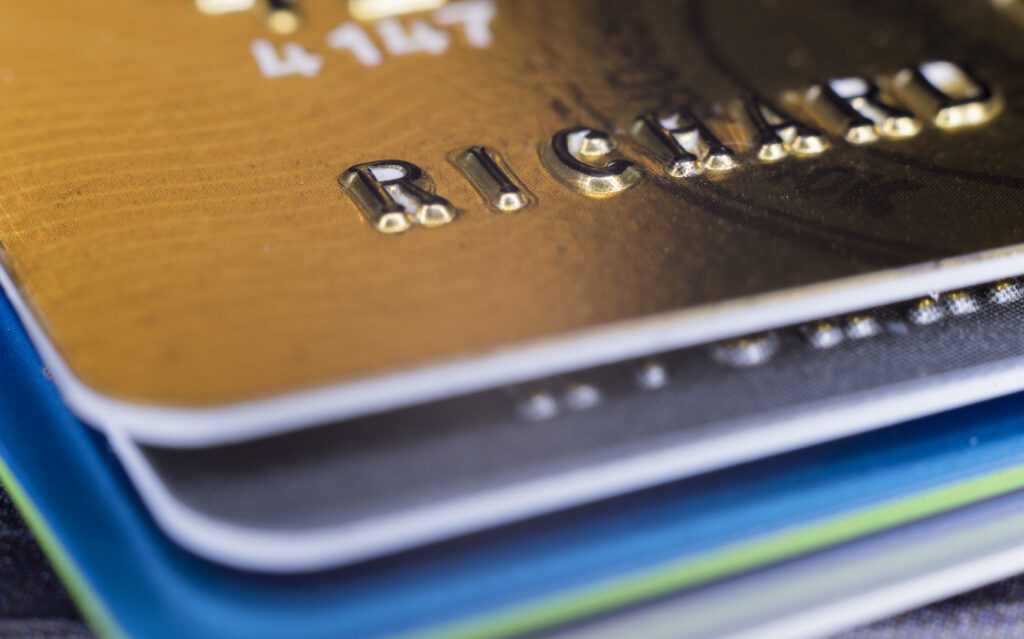
Juggling multiple credit cards can feel like a balancing act. But a simple system can make it easier to track spending, due dates, and balances without losing sight of your overall budget.
Here’s how to manage multiple credit cards more responsibly, plus a few payoff strategies to consider if you’re already carrying balances.
Does Having Multiple Credit Cards Help Your Credit Score, and How Do You Manage Them Responsibly?
Having multiple credit cards doesn’t automatically improve your credit score.
Credit-scoring models consider several factors, including your payment history, how close your balances are to your credit limits, the age of your accounts, and the number of credit accounts you have. The Consumer Financial Protection Bureau explains that paying on time and keeping balances low relative to your available credit can help support a stronger credit profile.
Having more than one card can increase your total available credit. If your balances stay the same, that may lower the percentage of your available credit you’re using. But opening additional cards can also create new hard inquiries, shorten your average account age, and make it easier to take on more debt.
Multiple cards can also provide access to different rewards or payment options. The trade-off is that you’ll have more accounts, balances, due dates, and statements to monitor.
That makes organization more important than the number of cards you have.
How Should You Use Multiple Credit Cards? 4 Key Tips
A simple system can make several cards easier to manage.
1. Give Each Card Its Own Role
Assigning cards specific purposes can make spending easier to track.
For example, you might use:
- One card for groceries
- One for gas or transportation
- One for recurring bills
- Another only for planned purchases that earn useful rewards
The goal isn’t to create a reason to spend on every card. It’s to make it easier to understand where charges are coming from and how they fit into your budget.
If assigning multiple cards makes spending harder to control, a simpler system with fewer actively used cards may work better.
2. Write Down Your Due Dates
Make a list of each card’s statement closing date and payment due date.
A calendar, spreadsheet, budgeting app, or phone reminder can help you see upcoming payments in one place.
You may also be able to ask an issuer to change your due date. The CFPB notes that some creditors may be willing to change a monthly due date to better match when you get paid.
Grouping due dates can simplify your system, but only if the resulting payment schedule fits your cash flow.
3. Consider Autopay
Automatic payments can help reduce the risk of accidentally missing a due date.
The CFPB recommends automatic payments or electronic reminders as ways to help keep payments on time.
You might set autopay for:
- The minimum required payment
- A fixed amount above the minimum
- The full statement balance
Which option makes sense depends on your budget and whether you carry a balance.
If you use autopay, don’t stop monitoring the account. Make sure the linked bank account has enough money available before each scheduled payment.
4. Set Up a Check-In Routine
Reviewing your accounts regularly can help you catch problems before the payment due date.
Por ejemplo:
- Check balances and recent transactions once a week
- Review each monthly statement
- Confirm that automatic payments went through
- Look for unfamiliar transactions
- Compare your total card spending with your budget
- Check whether you’re making progress on balances you’re trying to pay down
Your check-in doesn’t need to take long. The goal is simply to know what you owe and when it’s due.
What Is the Smartest Way to Pay Off Multiple Credit Cards?
If you’re carrying balances on several cards, choosing a payoff method can make repayment feel more manageable.
Recent Bankrate research found that 47% of U.S. credit cardholders carry credit card debt from month to month.
Two common approaches are the avalanche and snowball methods.
The Avalanche or Snowball Method
With either strategy, you continue making the required payments on all your cards while directing extra money toward one balance at a time.
- Avalanche method: Prioritize the card with the highest interest rate. This approach generally targets the most expensive debt first.
- Snowball method: Prioritize the card with the smallest balance. This can provide quicker account-level wins and make progress easier to see.
After paying off the targeted card, move the amount you had been putting toward it to the next card on your list.
Neither method is automatically right for everyone. The better fit is usually the one you can follow consistently without missing required payments elsewhere.
Consolidación de deudas
A debt consolidation loan uses a new loan to pay off multiple existing debts, leaving you with one loan and one payment.
A consolidation loan might offer a lower interest rate than your credit cards, but that’s not guaranteed. The rate and terms you qualify for depend on factors such as your credit profile and the lender.
Before accepting a consolidation loan, compare:
- El tipo de interés
- Loan fees
- Monthly payment
- Length of repayment
- Total amount you’ll repay
- Whether the rate can change
Consolidation also doesn’t eliminate the underlying balances unless the proceeds are actually used to pay them off. If the original cards remain open, taking on new card balances afterward can leave you with both the consolidation loan and new credit card debt.
Learning How to Manage Multiple Credit Cards Can Take Time
Managing several credit cards isn’t just about remembering due dates. It means understanding how much you’ve charged across all accounts and making sure the total fits your budget.
If your system feels too complicated, simplify it. You don’t need to actively use every open card.
The goal is to have a system that makes spending, balances, and payments easier to understand—not one that creates more work than it solves.
PREGUNTAS FRECUENTES
Is There an App to Put All Your Credit Cards Together?
There are budgeting and personal-finance apps that can connect to multiple credit card accounts and display balances and transactions in one dashboard.
Features vary by app. Some focus on budgeting, while others emphasize subscription tracking, rewards, or payment reminders.
Examples include Quicken Simplifi and other account-aggregation tools. Before connecting financial accounts to any app, review its security practices, fees, privacy policy, and which institutions it supports.
You may also find that a spreadsheet, calendar, or the alerts built into your card issuers’ apps are enough to manage a few cards.
Does Having Two Credit Cards Build Credit Faster?
Not necessarily.
Having a second card may increase your total available credit. If your balances don’t increase, that could reduce your overall credit utilization. But opening the card doesn’t guarantee a higher score, and applying for new accounts can also affect your credit.
You don’t need to carry a balance or pay interest on either card to build credit.
What Is the 2/3/4 Rule for Credit Cards?
The 2/3/4 rule is a reported Bank of America credit card approval restriction, not a general rule that applies to every issuer or every credit card.
According to current Bankrate guidance on issuer application rules, the rule generally means you may be limited to approvals for:
- Two new Bank of America cards within 30 days
- Three within 12 months
- Four within 24 months
Bankrate notes that these issuer rules aren’t always formally published by the banks and may be based partly on cardholder reports, so application policies can change.
If you’re considering a particular card, check the issuer’s current eligibility terms before applying.
What’s the Best Way to Manage Multiple Credit Cards and Never Miss a Payment?
There isn’t a system that can guarantee you’ll never miss a payment, but automation and reminders can reduce the risk.
A simple setup might include:
- Putting at least the required minimum payment on autopay
- Setting reminders several days before each due date
- Checking that the linked account has enough money before autopay runs
- Reviewing all card balances once a week
- Using a payoff method for any balances you’re carrying
If your goal is to avoid purchase interest, paying only the minimum generally won’t accomplish that. When your card has a grace period and you’re eligible for it, paying the full statement balance by the due date generally allows you to avoid interest on purchases.
The key is to choose an autopay amount that your bank account can reliably cover and then continue monitoring the account rather than treating autopay as a set-it-and-forget-it system.