A high-yield savings account is a smart way to grow your money while keeping it accessible.
High-yield savings accounts have interest rates that are significantly higher than those of traditional savings accounts. For that reason, these accounts have become increasingly popular for short-term savings goals, idle cash and building personal net worth.
But as your balance grows, so does an important question: Do you pay taxes on a high-yield savings account?
Yes, you pay taxes on the interest you earn. We’ll break down exactly how high-yield savings accounts are taxed, what tax rate applies, how to report the income and what tax forms to expect.
How Does a High-Yield Savings Account Work?
High-yield savings accounts can be opened through banks and credit unions. They differ from traditional savings accounts because instead of gaining nearly no interest on your money, you can earn a much higher rate.
Recently, that rate has been anywhere from roughly 3% to 5% interest.
With a high-yield savings account, your money compounds on top of itself, so you have more money in your account each month that you’ve earned in interest.
Do You Pay Taxes on a High-Yield Savings Account?
You don’t pay taxes on the money you deposit into a high-yield savings account, but instead pay taxes on the interest your account earns.
Interest earned in a high-yield savings account is considered taxable income by the Internal Revenue Service (IRS). Even if you leave the interest in the account and never withdraw it, it is still taxable in the year it’s earned.
Por ejemplo:
- You deposit $10,000 into a high-yield savings account.
- Over the year, you earn $450 in interest.
- That $450 is considered taxable income.
It doesn’t matter whether the account is online or at a traditional bank — if it earns interest, that interest is generally taxable.
How Are High-Yield Savings Accounts Taxed?
High-yield savings account interest is taxed as ordinary income. This is important because ordinary income is taxed at your regular federal income tax rate, not at the lower capital gains rate.
Investments such as stocks may qualify for long-term capital gains treatment. On the other hand, savings account interest does not receive special tax treatment.
Here’s how taxation works:
- Interest accrues throughout the year.
- Your bank reports the total interest earned.
- You include the total interest amount on your tax return.
- Interest is taxed at your marginal income tax rate.
Federal Taxes
At the federal level, interest income is taxed according to your income tax bracket. The higher your total taxable income, the higher the rate you may pay on savings interest.
State Taxes
In most states, interest income is also subject to state income tax. If you live in a state with no income tax (such as Texas or Florida), you won’t owe state tax on the interest, but you’ll still owe federal tax.

Remember–if you get a tax form in the mail, the IRS got the same information. Matching your return to the information they already have keeps everything in check.
What Tax Rate Applies to High-Yield Savings Account Interest?
The tax rate depends entirely on your total taxable income and your filing status. Because savings account interest is taxed as ordinary income, it’s added to your wages, business income or other income sources.
Por ejemplo:
- If you’re in the 12% federal tax bracket, your interest will generally be taxed at 12%.
- If you’re in the 22% bracket, it will be taxed at 22%.
- Higher earners could pay 24%, 32%, 35% or 37%, depending on income levels.
Let’s say you earn:
- $70,000 in salary
- $1,000 in high-yield savings account interest
Your total taxable income becomes $71,000. The $1,000 interest is taxed at your marginal tax rate, not at a separate or special savings rate.
Does Compounding Change the Tax Rate?
No. Even though high-yield savings accounts often compound daily or monthly, the total interest earned during the calendar year is what matters.
The compounding frequency does not affect the tax rate, only the total interest earned does.
Do You Have to Report High-Yield Savings Interest on Your Taxes?
Yes, you are required to report all taxable interest income on your federal tax return.
The IRS expects you to report all interest earned, even if the interest is small, you didn’t withdraw the money or you didn’t receive a tax form (in certain cases).
What Tax Form Do You Get for a High-Yield Savings Account?
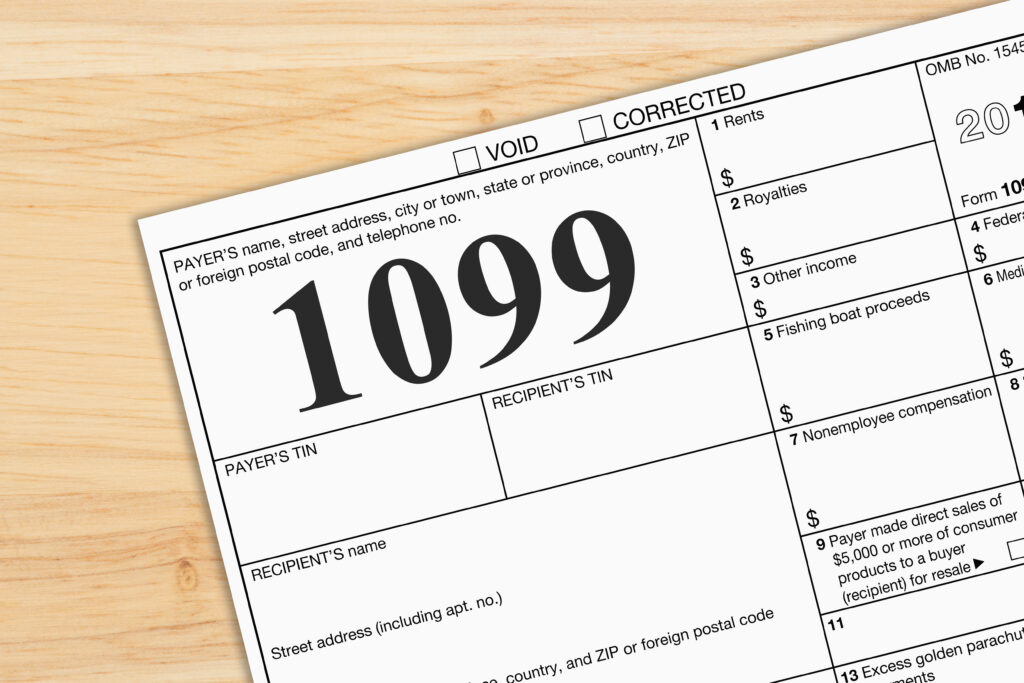
If you earn $10 or more in interest during the year, your bank will send you Form 1099-INT.
Form 1099-INT
Form 1099-INT is the official tax form used to report interest income.
You will typically receive this form by mail or electronically through your bank’s online portal. It is usually available by late January.
The form includes total interest earned, any early withdrawal penalties (if applicable), and federal income tax withheld, which is rare for savings accounts unless backup withholding applies.
Your bank also sends a copy of this form to the IRS, which is why it’s important to report the same amount on your tax return.
Are There Any Ways to Avoid Taxes on Savings Interest?
Because savings account interest is taxable, some savers look for tax-advantaged alternatives.
Here are a few options:
Tax-Advantaged Accounts
Accounts such as a Roth IRA allow earnings to grow tax-free if certain conditions are met. However, these accounts are designed for retirement and have contribution limits and withdrawal rules.
Municipal Bonds
Unlike savings account interest, municipal bond interest is often exempt from federal income tax. However, these are investments and carry risk.
It’s important to consider liquidity, safety and risk tolerance before shifting money out of a high-yield savings account solely for tax reasons.
Do You Still Pay Taxes if You Don’t Withdraw the Interest?
Yes, a common misconception is that you only pay taxes when you withdraw interest. That is not correct.
Interest is taxable in the year it is credited to your account. That is true even if you leave it untouched, it continues compounding or you never transfer it.
The IRS considers it income once it is available to you.
How Do Joint Accounts Work?
If you have a joint high-yield savings account, the 1099-INT is usually issued under the primary account holder’s Social Security number.
However, the interest income may legally belong to both account holders. In some cases, you may need to allocate interest between co-owners when filing taxes.
What Happens If You Don’t Report Interest Income?
Because banks send Form 1099-INT directly to the IRS, failing to report the income can trigger IRS notices or penalties. Even small discrepancies can generate automated letters.
How Taxes Affect Your Real Return
Let’s say:
- You have $20,000 in a high-yield savings account earning 4.5%.
- You earn $900 in interest.
- You are in the 22% federal tax bracket.
- Your state tax rate is 5%.
You could owe:
- $198 in federal tax (22% of $900)
- $45 in state tax (5% of $900)
Total tax: $243
After taxes, your net interest would be $657.
While taxes reduce your return, high-yield savings accounts still offer strong benefits such as liquidity, no market risk and predictable returns.
Reflexiones finales
High-yield savings accounts can help your money grow, but the interest you earn is treated as taxable income.
That means you may owe federal and, in some cases, state taxes each year, even if you leave the money in the account.
Knowing how interest is taxed and reported can help you avoid surprises at tax time. While taxes may lower your overall return, these accounts still offer a stable and accessible way to save.